
Read it in the LA Times.
Read it in the LA Times.

This has been a year of circling back and I’m not sad about it.
When an L.A. Times editing gig took a delightful turn in March, I gained temporary oversight of book reviews and reacquainted myself with the New York publishing world I left decades ago. Diving back into this world was a treat, alternately daunting (given the high volume of releases and tight review budget at my disposal) and thrilling (reading good books and well-crafted critiques). My editing duties are winding down, but I have savored the gig while it lasted, just as I told myself to do when it began.
I also discovered a woodsy creek side trail near my new home that’s a lot of fun to run. Canopied by trees and gently rolling, it reminds me of East Coast trails I took for granted before moving to L.A. Running down the hillside trail just like I used to in my younger days has been another Proustian treat in recent months.
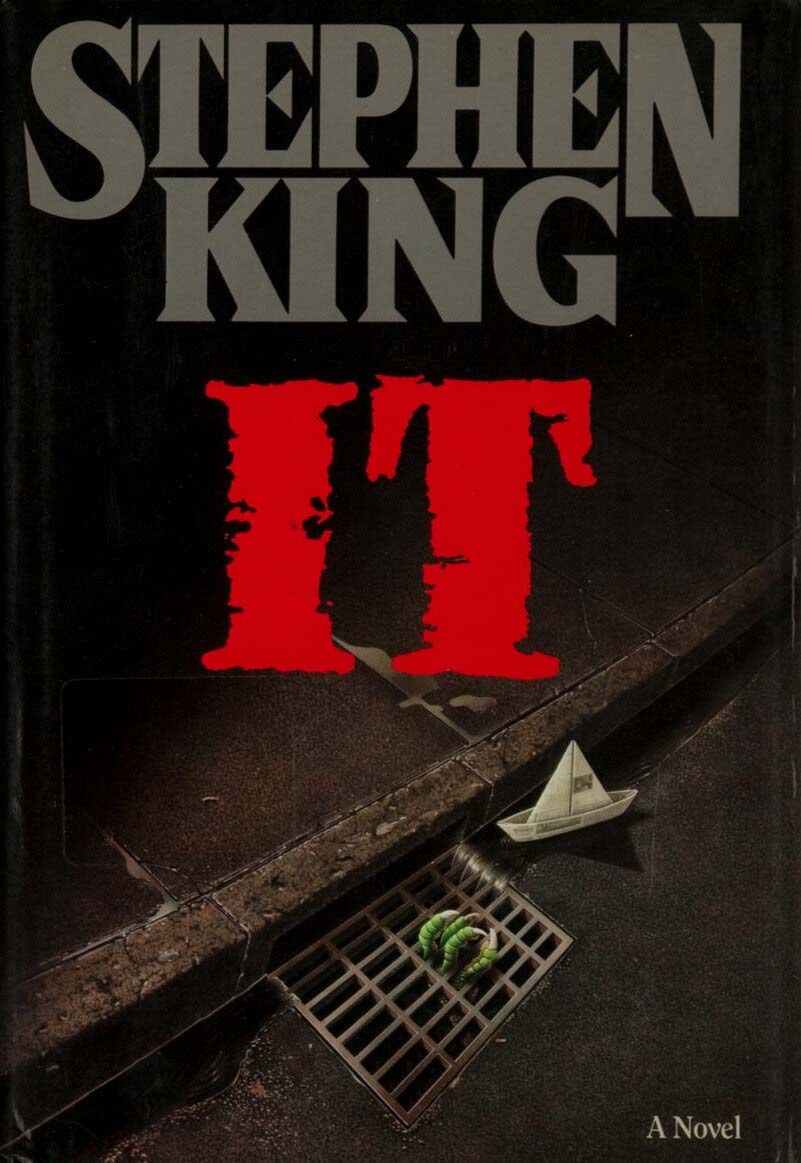
But back to books. My brief marketing job at Viking Penguin (as it was then called) was not right for me in a number of ways, not least its pitiful salary, but it did give me a glimpse into the business side of book publishing, and an oft-repeated anecdote about xeroxing copies of Stephen King’s “It” manuscript along with a less-traveled one about “The Basketball Diaries” author and “People Who Died” singer Jim Carroll hitting on a co-worker’s teenage daughter.
The actual marketing work? That had mostly faded from memory until my L.A. Times inbox started filling with pitch after pitch for coverage, jackets and titles blurring together in a sea of familiarity even as I reminded myself of the work that goes into individual book promotion.
Happily, there were plenty of distinctive offerings in the mix. One example: “Pick a Color,” a promising debut novel with a punchy title and jacket to match.

Souvankham Thammavongsa’s book, published by Little, Brown late last month, takes its title from the question nail salon workers ask customers as soon as they walk in the door. In just one of many amusing details, all the workers go by the name Susan to make it easier for customers while also playing on the fact that many of them can’t distinguish between similarly named and outfitted workers.
But Thammavongsa, a Canadian Laotian poet who previously wrote a well-regarded collection of short stories, makes it clear that they all have inner lives, as downplayed as they might be for customer consumption. Most vibrant of all: the narrator, a former boxer who revels in the freedom that comes with owning her own shop. The novel didn’t hold my attention to its conclusion but I was knocked out by Thammavongsa’s voice and the world she dramatically conjured in “Pick a Color.”
Wait, there’s more: Here is a link to my L.A. Times feature about “The Carpool Detectives,” a true crime book that reads like a novel, and guide to of five L.A. area novels released this summer. The authors for the latter graciously explained why they set their novels where they did and supplied their favorite local hangout spots, enabling readers to craft their own literary adventures as desired.
 My favorite moment in last night’s “Girls” came towards the end of the episode, when Lena Dunham’s Hannah quizzed her therapist on his literary accomplishments.
“Have you written a book?” she asks.
Ever droll Bob Balaban as the therapist: “Yes.”
“Was it a therapeutic text?” she parries with a slight edge in her voice.
“No.”
Edge increasing: “Was it a memoir?”
Shredding the last of her defenses, the therapist informs Hannah it was a book about a boy and his dog that sold 2.5 million copies.
There are many things I love about that exchange: the way it gently punctures Hannah’s grand ambitions and creative snobbery. The unexpected reveal of the therapist’s success as an author.
But more than anything, I love how it gives voice to a distinctive type: the smart and critical lit gal. This is not earnest Anne Hathaway in “Devil Wears Prada” or preternaturally perky Meg Ryan in countless Nora Ephron movies, but rather Chloe Sevigny’s aspiring book editor in “The Last Days of Disco.” Or even Hope Lange in “The Best of Everything.”
These women are ambitious, bookish and discerning.
I know these women. So does Dunham, a wildly talented writer-director who inked a lucrative deal to write a book of essays for Random House last fall.
 Good news, bad news: There are still two bookstores on Telegraph Ave. But the shopping district is far more depressing than it used to be, with more vacant stores and fewer colorful vendors than visits gone by.
Even on a beautiful Saturday afternoon.
 A few hours after our arrival, music-powered proselytizing had given way to an aggressive fellow striding the thoroughfare with a hand-written placard declaring “Fuck You/Pay Me” around his neck. Vendors were packing up before the sun went down; stores closed at 6 instead of 7 or 8.
Thankfully, Moe’s Books was not one of them. Surviving and apparently still thriving six years after neighboring Cody’s closed shop, the store stands out like a beacon in this faded tie-dyed milieu.
 With four floors of books and an uncluttered layout, Moe’s evokes an earlier — and happier — era for independent bookselling.
Sure, Shakespeare & Co. is across the street, not far from Rasputin’s and Amoeba.
But Moe’s gave me the most hope for an indie retail future.
 “The Financial Lives of the Poets” is avert-your-eyes funny: I kept putting it down, only to pick it right back up. Jess Walter spins comic discomfort out of his hero’s harebrained schemes the way Larry David does on “Curb Your Enthusiasm”: You know nothing good can come of his actions, and you’re right.
But you still want to see how it all turns out.
Matt Prior, a business reporter sorely lacking financial judgment, is behind the eight ball when “The Financial Lives of the Poets” begins: Laid off from his newspaper job, he’s about to lose his house, and, he suspects, his marriage. Not helping: the fact he gambled the family’s money on a crazy website marrying poetry and finance a few years earlier, or his wife Lisa’s eBay shopping spree. Other added pressures: His senile Dad is staying with them after losing his own nest egg to a stripper; the kids are in a private school the family can no longer pretend to afford.
So what does Matt do? Fall into a money making scheme straight out of “Weeds.” There’s a riotous mix of characters – evil bosses, fellow journos struggling to hold onto their jobs, and hapless drug dealers – that liven up the proceedings as Matt races against the clock, obsessively monitoring his wife’s online flirtations with a former boyfriend as he bumbles along.
Walter, a former newspaperman himself, isn’t interested in creating a sob story about our country’s financial predicament or flailing newspaper biz. Nor does he wag his fingers a la Michael Moore. The bosses and bankers are evil, but Matt and his cohort aren’t helping themselves with their foolhardy behavior.
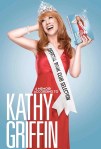
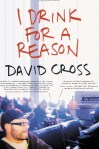 Been reading a slew of books by comics lately, because there are a number of them coming out, and who couldn’t use a laugh these days? What surprised me most — and probably shouldn’t have — is how uneven they have been.
Why should I expect funny guys and gals to be able to write sustained comedic prose? That’s not what stand-ups or sketch comics do; they tell a funny story then move on the next gag or anecdote. Without an overarching theme or connective narrative thread, pacing can be a problem: When books are written as a string of self-contained stories or anecdotes, it’s easy to put them down for a while after you’ve finished a chapter.
Such has been the case for three of the four books by comedians I’ve read, wholly or partially, the past few months. The exception? Kathy Griffin’s unexpectedly soulful memoir, “Official Book Club Selection.”
The brassy comedienne, who wrote the book with the help of journo Robert Abele while filming her reality show, writes candidly about growing up the youngest in an Irish Catholic family, her struggles to make it in L.A., plastic surgery and marital travails. She also tackles an extremely difficult subject – her brother Kenny’s incest and drug problems – with sensitivity and grace.
 Salon critic Stephanie Zacharek calls “A Gate at the Stairs” exhausting and unsatisfying in a review posted today. Her theory: Author Lorrie Morre’s aggressive cleverness works better “when diced into smallish bits.”
In other words, there’s a reason why she’s so acclaimed as a short story writer, less accomplished as a novelist.
Which isn’t to say Zacharek doesn’t like parts of “A Gate at the Stairs.” Like me, she has a mixed view, although her criticism takes a different form. In a nutshell:
“Moore isn’t lazy,” Zacharek writes. “She has the exact opposite problem: This is a case of a writer’s working too hard. She doesn’t allow enough air around her sentences — there’s no space for the gags to breathe, and her brainy contemplations continue to stack up until they resemble piles of clutter.”
The critic doesn’t address Moore’s awkward plotting, which actually speaks to the same problem. Another reminder that novels are a different beast than short stories.
Read the review. Earlier: ‘A Gate at the Stairs’ is good, but is it great?
Oh how I love it when the New York Times serves up decidedly different takes on the same book in its daily and weekly pages. Michiko Kakutani delivered a tough but largely positive review of Lorrie Moore’s “A Gate at the Stairs” in Friday’s paper, whereas Jonathan Lethem out and out raves about it in the paper’s Sunday book review section, suggesting that doubters ought to have their head examined.
So which is it? I have an even more mixed take on the book. There was much to love in “A Gate at the Stairs” — narrator Tassie Keltjin is affecting, as is her quirky family — but its weaknesses bugged me long after I finished reading. The plot, tied to fallout from 9/11, begs credulity. And I generally find it annoying when authors withhold key plot information under the guise of character obliviousness or diffidence, as was the case here. Killer closing lines couldn’t quite make up for those deficiencies.
Kakutani notes Moore’s clumsy job orchestrating certain revelations and an unfortunate tendency toward wordplay, but forgives those weaknesses, judging “A Gate at the Stairs” the author’s best book yet.
“If Ms. Moore, who started out as a short-story writer, demonstrates some difficulty here in steering the big plot machinery of a novel, she is able to compensate for this by thoroughly immersing the reader in her characters’ daily existences,” Kakutani writes.
 Many a foodie would kill for the job that Frank Bruni is leaving voluntarily. But how many of them have as complicated a relationship with eating as the outgoing NYT restaurant critic? In “Born Round,” Bruni chronicles his love for food, and battle to control his appetite, which he had finally gotten under control by the time he took the job. Few writers would be able to pull off these stories the way Bruni did. Read my review in today’s LA Times.
 And now, for a reminder that middle-age need not mean sitting around whinging, I bring you Dara Torres. The Olympian who mounted an improbable comeback at age 41 is still competing one year later despite pesky knee problems and a rambunctious toddler at home.
Over the weekend, she competed in the world swimming finals for the 50 meter free, alas finishing eighth. Tonight she’s skedded to appear on “The Daily Show.”
She took time out of the pool long enough last year to pen “Age Is Just a Number” with coauthor Elizabeth Weil. In this frank account, published in April, Torres talks about her struggles with bulimia, failed marriages and other missteps along the way to her fifth Olympic Games in Beijing. It hasn’t always been easy but Torres isn’t the type to scare off easily; she has always been blessed with a strong competitive drive and financial resources to pull her through various setbacks.
Best of all: She never intended her last comeback, but rather fell into it after resuming swimming during pregnancy.
“I didn’t consult any scientists to see if my comeback plans were crazy,” she writes. “I suppose I didn’t want to hear if they were. But later I learned that lifestyle, not genetics, is the primary reason older athletes slow down, and that made a lot of sense to me.”
Torres hasn’t ruled out the 2012 Games, but for now she’s ready for a much needed break. The rest of us would be well-served to heed her message: Don’t let age make you give up on your dream.
Earlier: Oh snap out of it: Why midlife crises can be so boring, Lessons from my mother
 Diane Garrett