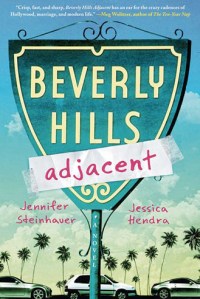
 I’ll say this for Jennifer Steinhauer: She definitely writes about what she knows in “Beverly Hills Adjacent.” The L.A. Bureau Chief for the NYT drowns her first novel, co-written by actress-author Jessica Hendra, with knowing details and familiar showbiz figures. Some are so thinly-disguised, in fact, you wonder why they bothered. (Jenna Mills for Jenna Elfman? Couldn’t they do better?)
What I can’t understand is why Steinhauer decided to write such a frothy piece of chick lit. It seems strange for a journo charged with directing hard news coverage to go in such a direction. Sure, other newspaper reporters write: Mary McNamara contributed a similarly frothy tome titled “Oscar Season” a year ago, but she’s an entertainment reporter, now TV critic, for LAT, and does not oversee hard news. Male reporters have written their fair share of genre fiction over the years, but those have tended toward mystery novels with some death to add a harder edge. I can’t think of anything this fluffy from a newspaper journo of her stature. Maybe I’m just forgetting.
Steinhauer further muddied the waters by letting Jamie Lynton, wife of Sony Pictures honcho Michael, host a book party at their house. When Gawker called her out on it, the scribe brushed aside any suggestion of conflict of interest, parrying, “Do I cover the movie beat?” She pointed out that she has nothing to do with cultural coverage, and reports to the national desk. Her husband Ed Wyatt, however, is a TV reporter for the paper.
To make matters worse, the book isn’t that good. There are funny moments, and compelling enough characters to carry readers through, but overall the material’s very thin. Like many beginning novelists, the writers mistake brand names and established regional haunts for character development. Of course the exercise moms prefer Sprinkles cupcakes to June’s hand-crafted ginger cookies! And they wear stretchy yoga pants everywhere! Maybe this will seem fresh to outsiders, but it’s very obvious to anyone who’s spent time in, or around, showbiz. Would that the writers spent a little more time on creating characters rather than types and oppressive scene setting.
As McNamara noted in her LAT review, the book “is so front-loaded with details it almost collapses: It’s not just a cupcake from Sprinkles, it’s a red velvet cupcake from Sprinkles; a character didn’t just wait tables when she came to L.A., she waitressed at Kate Mantilini.” A little local accuracy adds flavor, McNamara writes, but the volume here threatens to consume the story line.
The two main characters, UCLA prof June and her character actor husband Mitch are the most fully realized. The book follows their tandem career crises — his comic battle to get cast during pilot season and her struggle to remain faithful as she vies for tenure. Naturally, there’s plenty of second guessing about their move to L.A. from New York, where Mitch pursued theater, not big bucks.
The writing improves toward the end, becoming more fluid and less epigrammatic. Perhaps Steinhauer’s next novel will take up where she left off, and not head down the same tired road again.
 Manohla Dargis’s barbaric yawp about Hollywood went viral yesterday, and for good reason: The NYT critic let loose on rampant sexism in an interview with feminist-leaning Jezebel, spewing four-letter words with abandon. The interview made explicit that which her Sunday NYT essay on female directors suggested: She’s deeply pissed off about studios that repeatedly fail women in their choices of material and talent.
 Diane Garrett