But was it a memoir? The way smart ‘Girls’ talk — and think

Books, Girls, HBO, Writing

lena-dunham-as-hannah-writing-computer-girls-book-dealMy favorite moment in last night’s “Girls” came towards the end of the episode, when Lena Dunham’s Hannah quizzed her therapist on his literary accomplishments.

“Have you written a book?” she asks.

Ever droll Bob Balaban as the therapist: “Yes.”

“Was it a therapeutic text?” she parries with a slight edge in her voice.

“No.”

Edge increasing: “Was it a memoir?”

Shredding the last of her defenses, the therapist informs Hannah it was a book about a boy and his dog that sold 2.5 million copies.

There are many things I love about that exchange: the way it gently punctures Hannah’s grand ambitions and creative snobbery. The unexpected reveal of the therapist’s success as an author.

But more than anything, I love how it gives voice to a distinctive type: the smart and critical lit gal. This is not earnest Anne Hathaway in “Devil Wears Prada” or preternaturally perky Meg Ryan in countless Nora Ephron movies, but rather Chloe Sevigny’s aspiring book editor in “The Last Days of Disco.” Or even Hope Lange in “The Best of Everything.”

These women are ambitious, bookish and discerning.

I know these women. So does Dunham, a wildly talented writer-director who inked a lucrative deal to write a book of essays for Random House last fall.


Oh, to be Quincy Jones: ‘Love drips from his fingertips’

DG Creations, music, Variety, Writing

quincy-jones-charity-story-variety-homepageSeriously, I don’t know how he does it: Quincy Jones is about to turn 80, and he’s still a very active producer who makes plenty of time for philanthropic endeavors.

What’s his secret? One long-time associate, who runs his music consortium, told me “love drips from his fingertips,” while another head of a charity talked about how he sprinkles Quincy dust everywhere. Whenever they need him, the heads of these organizations told me, he is there.

Here’s my Variety story about it.

Sadly, it looks to be my last in Daily Variety, which is ceasing publication later this month. But the good news is that new owner Jay Penske has overhauled the pub’s website and promises to do the same for weekly Variety, which I worked on as writer-editor for seven years and have freelanced since.

Don’t Be That Guy: Who Concert

DG Creations, music, Writing

roger-quadropheniaThis week, I was fortunate enough to see the Who perform “Quadrophenia” at the Staples Center. I fell in love with the album in high school, when my friend Leslie and I saw the movie inspired by it with her older sister.

But I hadn’t listened to the album in decades, and wasn’t sure how it would hold up. Especially with Pete and Roger approaching 70.

That wasn’t a problem: They were really good, hitting most of the notes and rocking harder than I ever could hope to at that age. I thrilled to the music just like I did all those years ago.

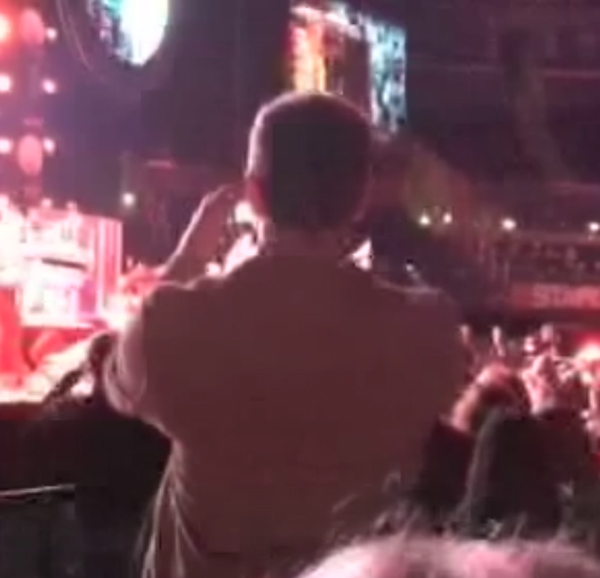
One irritation: the guy two rows ahead of us kept standing when everyone else around him was seated. Trust me, you don’t want to be that guy.

thatguyHe sat down for a while, and then, just as the rock opera was reaching its emotional crescendo with “Love, Reign O’er Me,” popped up again. He finally parked it after a lady within reach asked him to do so. And we once again got a clear shot of the stage and the woman exuberantly signing for the hearing impaired in front of him.

As a short woman, I dread getting stuck behind the vertically endowed. I beg you: Do not be that guy.

Here are some unobstructed views of Roger strutting the stage while he belts out the album’s signature song: this video and this one.

People don’t want to believe

journalism trends, Mad Men, media, Writing

They don’t want to believe that major cities can’t sustain daily newspapers anymore. And they cry foul when a beloved character prostitutes herself for a partnership in a fictional ’60s ad firm. Why? Because they can’t — or simply won’t — believe it.

But in fact the move toward diminished print publication has been underway for a while now. Why should we expect the New Orleans Times-Picayune to be immune? Just because you love a city and its traditions doesn’t mean they can or will continue forever.

Seriously, why did they make him do it?

DG Creations, media, Surf N Pixels, Writing

I live near the water so I’m used to occasional foam on the beach.

The anchors at the Fox D.C. affiliate? Apparently not so much.

Over the weekend, at the height of Hurricane Irene, they kept marveling at the foam covering poor Tucker Barnes in Ocean City, Md., asking him question after question about its composition.

Barnes answered the best he could, but he clearly did not know that much more than they did. Later, a TV website asserted that the foam was “probably the remnants of raw sewage.” Which, ew, but maybe it wasn’t. (The report wasn’t all that conclusive.)

My bigger question: Why did they make him keep giving reports while foam of uncertain composition was spewing all over him? I do my best to avoid the stuff while I’m running barefoot on the sand.

You don’t have to read water quality reports to know that there are plenty of toxins in our waters under the best of circumstances, let alone raging hurricanes. (And trust me, if you have read those reports, you’ll really be squeamish about wading in during a storm, when runoff makes water quality especially dubious.)

My Wrap story on hurricane coverage, complete with video of Tucker and a streaker in Virginia Beach, is here.

Let Us Now Praise: 'Sex and the Single Girl'

DG Creations, Let Us Now Praise, Movies, Sixties sex comedies, Writing

How much do I love “Sex and the Single Girl”? It’s so retro Sixties sex comedy: Light on carnal activity, but heavy on farce. Natalie Wood stars as Helen Brown, a cute but prim psychologist who has authored a book about single women; Tony Curtis is the lascivious magazine writer Bob Weston who wants to get the goods on her.

Already you can probably tell where this is going: The prim woman falls for the wolfish seducer that isn’t really that wolfish when you get right down to it.

Doris Day starred in a number of similar farces in the era, including “Pillow Talk.” Wood, better known for serious dramas leading up to “Sex and the Single Girl,” displays a nice comedic touch in the movie. Just watch her face as she tries to resist the charms of her duplicitous patient.

And let’s face it: She looks quite ravishing. (Walking through the room while I watched it on cable yesterday, my husband asked: How young was she? Answer: 26.)

Tony Curtis is also fine, but familiar to this terrain, as the filmmakers acknowledge with a few winks at “Some Like It Hot” in the dialogue. Henry Fonda and Lauren Bacall also have fun with their roles as the bickering marrieds, though I doubt I appreciated their sublime presence when I first saw the movie on TV in the Seventies.

Nor did I understand the cultural significance of Helen Gurley Brown — my tastes ran to Mademoiselle, rather than Cosmo — and the book that provided the basis for the movie. Only yesterday I learned from TCM that Joseph Heller adapted it for the bigscreen. That still boggles my mind — the author of “Catch-22” laboring over an adaptation of a Helen Gurley Brown book.

My point is this: You don’t have to know any of that to enjoy “Sex and the Single Girl.” But if you do, you’ll like it that much better.

Avatar's weird beauty

awards season, DG Creations, Movies, Surf N Pixels, Writing

The thing that dazzled me most about “Avatar” was not jump in your face 3D effects (which kinda made me queasy), and it certainly wasn’t the story (which was laughable in parts). Nope, it was the strange beauty of Pandora.

At first the creatures of this futuristic world looked peculiar, and in a few cases, downright ugly. But the colors of those flying beasts was a wonder to behold; Pandora’s visual charms grew on me. And the terrible last fight sequence with the blue-hued Na’vi in warpaint was simply stunning. Say what you will about James Cameron, and I’m not the biggest fan of his movies, but those achievements are remarkable. I can’t think of any sci-fi movie as beautiful and strange as “Avatar.”

Did the evil colonel really need to be such a caricature? No. The love scenes so dopey? Not hardly. And why did those fierce Pandora creatures disappear for two-thirds of the movie? Oh, I get it: To show how idyllic that world was. So reassuring they were at Cameron’s disposal when he needed them.

But I guess I forgive him for those shortcomings. Kinda. The real question is: Will the Academy overlook them as well? Will they vote for rigorous storytelling of, say,  “The Hurt Locker” or visual splendor of Cameron’s world? Real-life war or mythical one? I know which way I’m leaning.

Telling it like it is: The ugly truth about sexism (and ageism)

chick flick, journalism trends, media, Movies, studios, Writing

Manohla Dargis’s barbaric yawp about Hollywood went viral yesterday, and for good reason: The NYT critic let loose on rampant sexism in an interview with feminist-leaning Jezebel, spewing four-letter words with abandon. The interview made explicit that which her Sunday NYT essay on female directors suggested: She’s deeply pissed off about studios that repeatedly fail women in their choices of material and talent.

Among the many choice bits:

Working within the system has not worked. It has not helped women filmmakers or, even more important, you and me, women audiences, to have women in the studio system.

and a personal pet peeve — the constant surprise that women like seeing entertaining movies about women:

This, gee whiz, Sex and the City‘s a hit, Twilight, hmm, wonder what’s going on here. Maybe they should not be so surprised. In the trade press, women audiences are considered a niche. How is that even possible? We’re 51 percent of the audience.

It’s not just the trade press, either; this surprise seems to creep into consumer box office reports as well.

Dargis is equally scathing about the suggestion that she take it easy on films directed by women, calling the notion “incredibly insulting.” But mostly she hopes that Kathryn Bigelow (pictured above) wins the Oscar for directing “The Hurt Locker,” a muscular action movie.

Lit slowdown

journalism trends, Writing

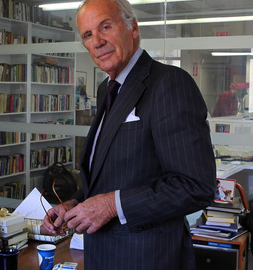
There’s something really great about Lewis Lapham’s decision to slow down, rather than speed up, his publication pace. The long-time editor of Harper’s magazine stepped down from the monthly two years ago and now devotes his editorial attention to Lapham’s Quarterly, a scholarly journal.

The focus is on historical writings. The target audience?  “People who wished they had paid more attention in school,” Lapham told the NYT. Yes, there’s a website, Tim Arango goes on to write, “but up-to-the-minute is not the mantra.”

Best yet, the dapper 74-year-old plans to start blogging. “I’m looking forward to that,” he told the NYT. “It’s a new form.”

I just hope more would-be publishers join him and Dave Eggers’ McSweeney’s in a slow-lit movement.

The web was so cute then

digital media, Writing

LATcybercriticUnearthed my late ’95 L.A. Times story about online message boards devoted to TV shows, and had to smile at how tame “the wild and wooly Internet” was compared to today. Also amusing: References to TV show long since gone and suggestions that David Letterman play Phoebe’s dad on “Friends.” Jeremy Pivens’ character on “Ellen” also drew criticism. And I love that I and/or the LAT felt compelled to spell out World Wide Web. I could go on, but won’t. It’s here, if you’re interested. Adding more of my older stories to my archives, for now accessed here.